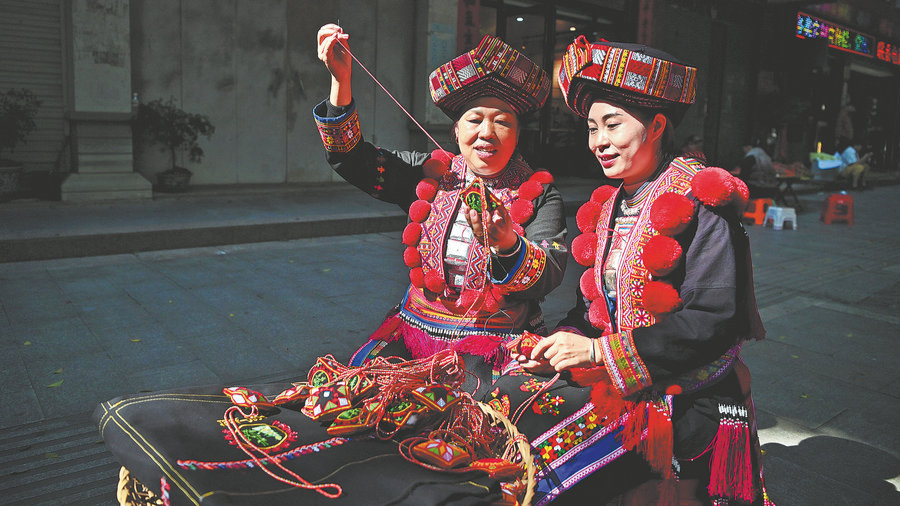
Yao Embroidery
Introduction
Yao Embroidery is a traditional craft central to the cultural identity of the Yao ethnic group, primarily residing in Guangxi Zhuang autonomous region, China. This intricate art form reflects their history, traditions, and daily life through vibrant colors, detailed patterns, and symbolic motifs often inspired by nature. Passed down through generations, young girls learn the skills, ensuring its continuation. Several regional styles of Yao embroidery have achieved national and regional-level intangible cultural heritage status. Beyond artistic expression, it decorates clothing, accessories, and household items. Recent efforts integrate Yao Embroidery into modern fashion and tourism, revitalizing the tradition and providing economic benefits to local communities.
Characteristics of Yao Embroidery
Yao Embroidery is celebrated for its exquisite craftsmanship and distinct features. Designs are drawn from the Yao people's natural surroundings and daily lives, incorporating flowers, animals, and geometric patterns. The prominent use of red, symbolizing happiness and prosperity, is a hallmark, especially among the Hong Yao ("Red Yao"). The embroidery process involves intricate hand-stitched techniques mastered over years. The fineness of the work, even today being done by hand, showcases the artisan's skill and patience.
Beyond aesthetics, Yao Embroidery has functional applications. It embellishes traditional attire like jackets, skirts, and headscarves, as well as accessories. Household items also benefit from this touch of cultural elegance. The craft reflects artistic sensibilities and carries deep cultural and symbolic meaning.
Cultural Significance
Yao Embroidery holds profound cultural significance, serving as a medium for expressing Yao cultural values, beliefs, and traditions. Motifs and patterns carry symbolic weight, representing fertility, harmony, and prosperity.
The craft plays a vital role in social and ceremonial contexts. During festivals, Yao women showcase elaborately embroidered garments, celebrating their heritage and strengthening community bonds. In villages like Huangluo, known as the "longhair village," embroidery is intertwined with other traditions, attracting tourists and highlighting Yao culture. Inclusion on intangible cultural heritage lists underscores its importance. Yao Embroidery stands as a testament to the resilience and creativity of the Yao people, a symbol of cultural pride, preserved through the dedication of artisans.
Modern Applications and Preservation
Yao Embroidery's survival in the modern world hinges on its integration into contemporary applications. Artisans apply traditional techniques to modern clothing and accessories, creating pieces that appeal to modern sensibilities while retaining cultural integrity. Workshops and training programs, such as those established by Pan Haiyan and Zhao Fengxiang, empower local women with embroidery skills, boosting incomes and sustaining the craft. Tourism in villages like Huangluo leverages rich cultural heritage, showcasing embroidery in performances, theaters, and museums, incentivizing the preservation of traditions. Recognition as intangible cultural heritage provides resources and support for continuation, safeguarding this valuable art form for future generations.








